
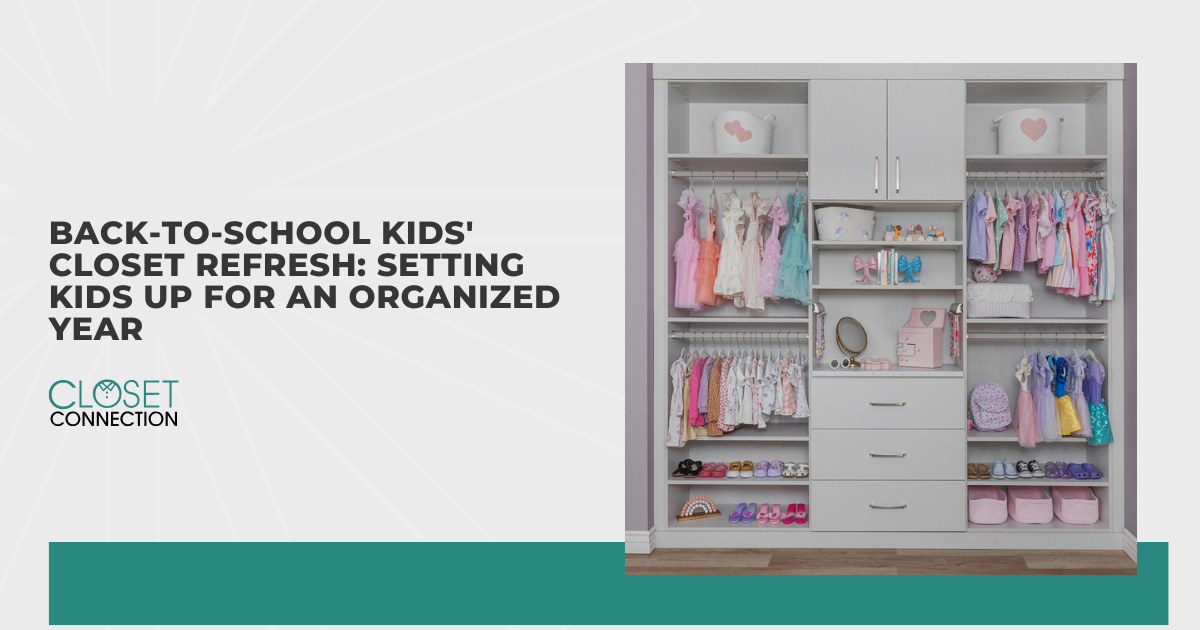
School's about to start, and most kids' closets are nowhere near ready for it. Clothes that don't fit anymore are still taking up half the hanging space, shoes are missing their pairs, and the backpack from last year is buried under a pile nobody's touched since spring. That's not a parenting problem or a kid problem, but rather a setup problem and it's more common than most families realize.
Kids who can get dressed without a meltdown and walk out the door feeling put-together tend to have better mornings and that confidence carries into the classroom. The closet is where that either happens or falls apart. I've seen it firsthand: when a space is built around how a child actually moves through their day, they're calmer, more focused, and far less dependent on a parent to sort out the chaos for them. A well-designed closet isn't just about storage, it's about setting up a routine that actually works.
Getting a kids' closet ready for a new school year takes more than a quick tidy, and I'll show you what actually makes the difference:
- Start with a closet cleanout
- Create easy-to-reach zones
- Organize outfits by school week
- Add storage for shoes and accessories
- Make room for backpacks and school gear
- Use labels for simple organization
- Choose adjustable closet features
- Keep seasonal items separate
- Make their closet fun and personal
Take these ideas into your next weekend cleanout and watch how quickly a chaotic kids' closet starts working for you.
Start With a Closet Cleanout
Real progress starts with an empty space, not a quick shuffle of hangers. Pull everything out, spread it where you can see it, and take an honest look at what's actually in there. Kids grow fast, so half of what you find probably doesn't fit anymore. I've walked dozens of families through this first step, and clearing out always saves them hours down the road.
Turning the cleanout into a shared, low-pressure task keeps it quick for everyone. Here's how I break down a kids' closet so it gets sorted without the overwhelm:
- Keep What Fits: Set aside pieces your child wears often and that still fit well. These earn prime spots at eye level, so grab-and-go mornings stay simple.
- Donate The Outgrown: Gather gently used clothes your child has grown out of. Passing them along frees up space and gives good pieces a second life elsewhere.
- Toss The Worn: Remove anything stained, torn, or worn thin. Letting these go clears room for the clothes your child genuinely reaches for each week.
Once the piles are sorted, your child’s closet already feels lighter before a single organizer goes in. Bag the donations right away, so they don't creep back onto a shelf by Sunday night. Your child will notice the difference too, and that buy-in makes the rest of the setup far easier.
Create Easy-to-Reach Zones
Height changes everything for a child trying to dress themselves. When rods sit too high and shelves stay out of reach, kids depend on you for the simplest tasks. Lower the everyday items to their level, and mornings shift from frantic to calm. I also believe accessibility is one of the most overlooked parts of a working closet, especially for younger kids.
Smart zoning comes down to matching each item with a spot that fits how your child moves through their day. Group school clothes at the front where little hands can grab them fast. Reserve higher shelves for things you handle, like extra bedding or rarely used gear. Keep the daily stuff low, and your child learns to manage their own space.
Zones only work when they stay consistent week after week. Pick a clear home for each category and resist the urge to shuffle everything around. Kids build habits around what stays put, so predictability matters more than perfection. Once the layout matches their reach, a kids' closet practically runs itself.
Organize Outfits by School Week
Decision fatigue hits hard on a busy morning, even for a six-year-old. Sorting outfits ahead of time strips the guesswork out of getting dressed. When clothes are grouped by day, your child just grabs the next set and goes. I always tell parents that a little Sunday planning saves five stressful mornings.
Weekly organizing works best when the system stays visible and simple to follow. Try one of these approaches inside your kids' closet:
- Hanging Day Organizers: Use a fabric organizer with five slots, one per school day. Load it Sunday night, and your child pulls a full outfit without any morning debate.
- Labeled Bins by Day: Set out small bins marked Monday through Friday. Fold complete outfits into each, so even reluctant dressers can manage the routine solo.
Involve your child in the Sunday setup so the choices feel like theirs. Let them pick which shirt pairs with which pants, and the buy-in follows naturally. Kids who help plan their week tend to stick with the system far longer. Over time, this small ritual keeps the whole closet system running smoothly.
Add Storage for Shoes and Accessories
Shoes wander more than any other item in a child's room. One ends up under the bed, the other behind the door, and both go missing right before the bus. Give footwear a dedicated home, and the daily hunt disappears for good. I've seen a simple shoe rack cut a family's morning chaos in half.
Small accessories need a plan too, or they scatter across the floor within days. Here's what I recommend adding to a kids' closet for shoes and extras:
- Low Shoe Racks or Cubbies: Keep sneakers, boots, and dress shoes in one visible spot. Pairs stay together, so your child grabs both without digging through a pile.
- Divided Drawers or Bins: Sort hats, belts, socks, and hair clips into separate compartments. Small items stop disappearing, and your child learns exactly where each thing belongs.
Visibility drives the whole system, since kids put back what they can see. Open cubbies beat closed boxes for younger children who forget what's tucked away. Keep the most-used pairs at the front and the occasional dress shoes toward the back. With everything in view, your little one’s closet stays orderly with almost no nagging.
Make Room for Backpacks and School Gear
Backpacks deserve a landing zone, not a spot on the floor by the door. When gear has a designated home near the closet entrance, packing up gets automatic. Your child hangs the bag, drops the lunchbox, and everything waits ready for tomorrow. I always tell parents that a single hook solves more morning problems than they'd expect.
Set up a grab-and-go station that keeps school essentials together in one place. Hooks at your child's height hold the backpack, jacket, and tomorrow's tote. Add a small shelf or bin nearby for the lunchbox and water bottle. When these items live together, nothing gets forgotten in the rush out the door.
Consistency turns the station into a habit your child owns. Have them unpack and rehang everything the moment they walk in each afternoon. Kids adapt quickly once the routine sticks, and the floor stays clear as a bonus. A well-placed gear zone keeps the whole kids' closet functional through even the busiest weeks.
Use Labels for Simple Organization
Labels take the guesswork out of putting things away. When each bin and shelf spells out what belongs there, kids know exactly where to return an item. Younger children who can't read yet do great with picture labels instead of words. I've watched labels turn a messy free-for-all into a system a five-year-old can run alone.
Good labeling stays clear, durable, and matched to your child's reading level. Consider these options for your kids' closet:
- Picture Labels for Pre-Readers: Use simple images of socks, shoes, or shirts on each bin. Kids match the item to the picture, so cleanup becomes a game they actually finish.
- Word Labels for Older Kids: Print clear, readable text for each drawer and shelf. Consistent wording builds independence and helps your child keep the space organized without reminders.
Involve your child in placing the labels so they remember where things go. Let them stick each one and talk through why it belongs there. Ownership makes the system feel personal rather than imposed. Simple labels quietly keep the closet in order long after the first week of school.
Choose Adjustable Closet Features
Fixed shelves and a single rod stop working the moment your child hits a growth spurt. Adjustable features solve that by shifting as your kid's height and wardrobe change. Lower a rod for a kindergartner, then raise it as they grow into their teens. I steer nearly every family toward adjustability, since it saves them a full redo later.
Flexible design gives a kids' closet real staying power over the years. These features earn their keep in almost every setup we build:
- Movable Rods: Reposition hanging rods as your child grows taller. One closet serves them from their earliest school years straight through high school without a rebuild.
- Repositionable Shelves: Slide shelves up or down to fit changing needs. Bulky sweaters, folded uniforms, and hobby gear all find a home as priorities shift.
Adjustable pieces cost a little more upfront but pay off across many seasons. Skip the temptation to save with a rigid layout you'll outgrow fast. Think of it as one thoughtful investment instead of repeated quick fixes. When the closet grows alongside your child, staying organized becomes the easy default.
Keep Seasonal Items Separate
Off-season clothes crowd the space your child needs right now. Winter coats and summer shorts don't belong in the same crowded rod all year. Rotating seasonal pieces out frees up prime real estate for what actually fits the current weather. I always tell parents that seasonal swaps are the fastest way to reclaim a cramped closet.
Store the out-of-season gear somewhere accessible but out of the daily flow. Clear labeled bins on a high shelf or under the bed work perfectly. Keep only the current season's clothes front and center where your child reaches them. When the rack holds just what fits today, mornings speed up naturally.
Set a simple reminder to swap the bins twice a year as seasons turn. Use the switch as a chance to check for outgrown pieces and reassess sizes. Kids grow through a season fast, so a quick review keeps the system honest. Regular rotation keeps a kids' closet lean, functional, and genuinely useful all year long.
Make Their Closet Fun and Personal
Kids take better care of a space that feels like theirs. Add their favorite colors, a fun bin, or a poster inside the door, and suddenly the closet earns their pride. Personal touches turn organizing from a chore into something your child enjoys. I like giving kids a real say here, since ownership does more for tidiness than any rule I could set.
Personality and function work hand in hand when you plan them together. Consider these easy ways to make a kids' closet feel special:
- Custom Colors and Finishes: Let your child pick a shade or finish they love. Kids connect with a space built around their taste, and that connection keeps them invested in it.
- Playful Bins and Hooks: Choose organizers in fun shapes or bright colors. Cleanup feels less like work when the tools themselves spark a little joy each day.
Give your child ongoing input as their interests shift with age. Swap out a theme or refresh the colors when they've outgrown the old look. Small updates keep the space feeling current and worth caring for. When a closet reflects who your child is, staying organized becomes something they want to do.
Conclusion
An organized kids' closet gives your whole family something bigger than tidy shelves. You get calmer mornings, fewer battles, and a child who feels a little more capable each day. Progress here doesn't demand perfection or a single big weekend, so don't stress about getting everything right at once. Small, steady effort adds up faster than you'd think, and your future self will thank you for starting. Trust that you've got what it takes to make this space work beautifully for your kids.
